
Oxidation reactions are of fundamental importance in Nature and are key transformation in organic synthesis. There is currently a need from society to replace waste-producing expensive oxidants by environmentally benign oxidants in industrial oxidation reactions. The aim with the proposed research is to develop novel “green” oxidation methodology that also involves hydrogen transfer reactions. In the oxidation reactions the goal is to use molecular oxygen (air) or hydrogen peroxide as the oxidants.
A large part of the studies of transition metal-catalyzed reactions in Prof. Bäckvall’s group has involved oxidation reactions. A logic extension of this work was therefore to focus on the development of processes using environmentally friendly oxidants such as molecular oxygen and hydrogen peroxide. Inspired by nature and the oxidations occurring in living organisms (e.g. the respiratory chain), environmentally friendly biomimetic oxidations with specially designed catalytic systems were developed. In these reactions the electron transfer processes occurring in biological oxidations were mimicked. This biomimetic approach was first utilized back in 1987 in a palladium catalyzed 1,4-diacetoxylation of dienes (Scheme 1), where a quinone and a metal-macrocyclic complex were used as electron transfer mediators (ETMs). Low energy barriers for electron transfer are obtained by the use of ETMs, in contrast to the high barrier for direct reoxidation of Pd(0) by molecular oxygen.
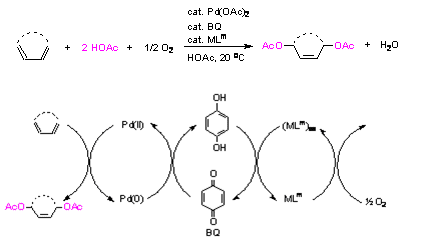 Scheme 1. Palladium-catalyzed aerobic 1,4-diacetoxylation.
Central to this biomimetic approach is the presence of oxygen activating metal-macrocyclic structures. A variety of these structures generally containing Cobalt have been synthesized and evaluated by the group. The most recent example is a metal-macrocycle where the quinone has been tethered to the Cobalt-containing framework (Figure 1).
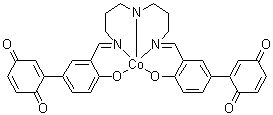 Figure 1. BQ teathered metal macrocycle.
The principle of this biomimetic oxidation was extended to other systems such as aerobic oxidation of alcohols and H2O2-oxidation of alkenes to 1,2-diols. In the former reaction, the ruthenium catalyst mimics the NAD+/NADH in alcohol dehydrogenase that is coupled to the respiratory chain for aerobic oxidation of alcohols (Scheme 2). In the respiratory chain the electrons of NADH are transported to ubiquinone and the hydroquinone thus formed is reoxidized to by cytochrome c and O2. In the biomimetic process of Scheme 4, the electrons taken up by the ruthenium catalyst are also transported to a quinone and the hydroquinone formed is reoxidized by a metal macrocycle/O2. Recently this cascade electron transfer chain was extended to the aerobic oxidation of amines.
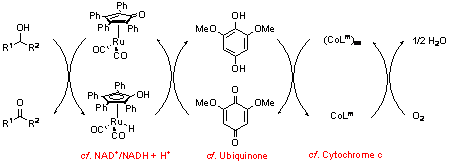 Scheme 2. Biomimeticaerobic oxidation of alcohols.
A few years ago the group has also developed novel osmium-catalyzed dihydroxylations using hydrogen peroxide as the oxidant (Scheme 3). In these reactions an electron transfer mediator, e.g. a flavin, was used to catalyze the hydrogen peroxide oxidation of the N-Methyl morpholine (NMM) to the N-oxide (NMO). The latter reacts rapidly with osmium(VI). This leads to a mild and selective oxidation with hydrogen peroxide without formation of effluents. The reaction was used in enantioselective dihydroxylation with chiral ligands and this is the first example of asymmetric dihydroxylation employing H2O2 as the oxidant. It was recently demonstrated that the whole catalytic system can be immobilized in an ionic liquid and this allows recycling of the whole catalytic system (“catalytic soup”). This is of great importance for future large scale applications.
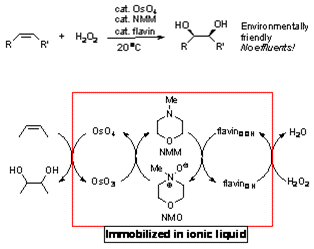 Scheme 3. Osmium-catalyzed dihydroxylations.
In later years the group has become interested in the formation of new highly valuable carbon-carbon bonds under oxidative conditions. These processes are generally more difficult to achieve than formation of new carbon-oxygen or carbon-nitrogen bonds. Bäckvalls approach was to utilize allenes as masked carbon-nucleophiles. Some examples involve dienes as substrates, which results in the formation of a π-allyl which can subsequently be attacked by a range of nucleophiles such as: Acetates, chlorides, alcohols and most recently water. Allene-substituted olefins also undergo similar reactions and effective oxidative carbocyclization can be achieved with high selectivity and yield (Scheme 4). In 2010 we also showed that not only fully carbocyclic structures could be prepared using oxidative carbocyclization of enallenes but also nitrogen containing structures in the form of various hydropyrroles.
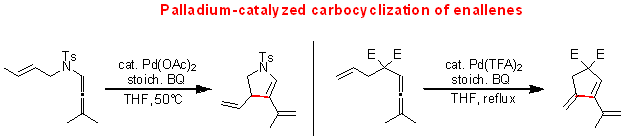 Scheme 4. Palladium-catalyzed oxidative carbocyclization.
In addition we have demonstrated that the carbocyclization approach is not limited to allenes as related oxidative carbocyclizations can be achieved using allylsilanes as masked carbon nucleophiles.